Annatto Seeds
Warm rust and burnt orange, from the seed pods of the achiote tree.

Tap Share ⬆️ in Safari, then choose "Add to Home Screen."
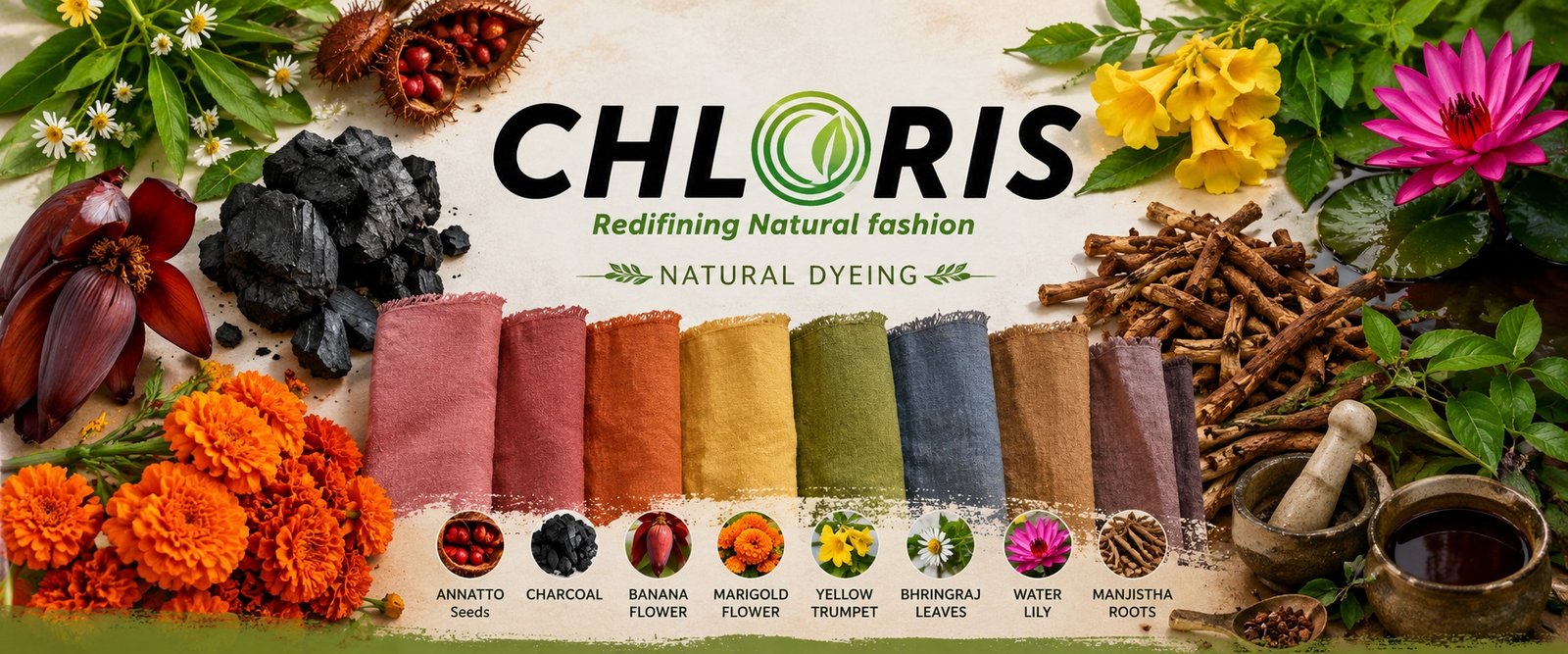
Chloris makes naturally dyed, small-batch clothing in India — coloured with roots, flowers, leaves and minerals, and nothing else.
Every piece we make is dyed the slow way. Instead of a synthetic chemical bath that delivers the same flat shade a thousand times over, we simmer cloth with plant matter until it takes the colour on its own terms. It takes longer, it costs more, and every batch comes out a little different.
That variation isn't a flaw we tolerate — it's the whole point. A marigold picked in March dyes differently to one picked in October. Water changes the result. So does the weather. No two Chloris garments are ever quite the same, and we'd rather you had one that carries the fingerprint of the season it was made in.
We work in small batches, with natural fibres and gentle-on-skin fabric, which is why we started with kids' garments and innerwear — the categories where softness and safety matter most. From there we've grown into everyday pieces built the same way.
Our mission hasn't changed since the first dye pot: bring naturally dyed clothing back into everyday wardrobes, without compromising on comfort, quality, or care for the people and the land involved in making it.
Each shade in the Chloris palette traces back to something you could hold in your hand. Here's what goes in the pot.
Warm rust and burnt orange, from the seed pods of the achiote tree.
Soft smoke greys and slate blues, from responsibly sourced hardwood char.
Muted mauve-pinks drawn from the bracts of the banana blossom.
Deep golden yellows from temple marigolds, gathered after offering.
Bright, buttery yellows from tabebuia blossom.
Earthy olive greens from the leaf long used in Ayurveda.
Dusty plums and soft violets from pond-grown lily petals.
The classic madder red — rose, brick and terracotta.
From gathered petal to finished garment, this is the path every Chloris piece takes.
We collect roots, flowers, leaves and minerals — much of it a by-product of farms, temples and kitchens that would otherwise be thrown away.
Fabric is prepared with plant-based and mineral mordants so the colour binds to the fibre and holds through wash after wash.
Cloth is simmered slowly in small batches. Temperature, water and season all shift the result — which is why no two lots match exactly.
Rinsed, sun-dried and cut into garments in short runs, then checked by hand before it reaches you.
Not a single garment passes through azo dyes, chemical fixers or optical brighteners. Ever.
We started with kids' garments and innerwear for a reason — those are the categories where what touches skin matters most.
Short runs mean less waste, less unsold stock, and colour that stays honest to its source.
Dyed and stitched here, close to where the plants grow, by people we know and pay fairly.
Browse the collection, or tell us what you're looking for — we're a small team and we read every message.